Cross-Border Coaches for Greater Bay Area Exchanges: Checkpoints, Documents and Prices
Plan school exchanges, business visits and association trips across the border. Compare checkpoints, documents and group clearance, with 45/49-seat Shenzhen Airport fares from $2,000, evening surcharges and six worked budgets.
Cross-border group transport guide
Greater Bay Area exchange coaches: key answers
For larger school exchanges, business visits, chamber tours or hometown association trips, a Hong Kong–mainland cross-border coachtravelling directly from Hong Kong is the most time-efficient and manageable option. Everyone boards at the school or office, stays with the same vehicle through the crossing and continues to the venue, avoiding vehicle changes, separation and waiting at the border.
According to the Flying Eagle price list, one-way urban Kowloon/Hong Kong Island–Shenzhen Airport fares start at $2,000 for 45/49 seats, $1,500 for 16 seats and $1,100 for seven-seaters. Holiday quotes may vary. For 16/45/49 seats, departures before 07:00 or after 19:30 add $500 per trip. Supply addresses for Shenzhen city, Guangzhou, Zhuhai, Dongguan, Foshan and Zhongshan quotations.
Cross-border vehicles
- Seven-seater: advance visits and small delegations
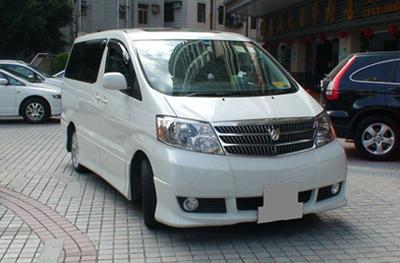
- 16-seat minibus: small exchange groups
- 45/49-seat coach: class and school-year groups
Key charging points
- 45/49 seats to Shenzhen Airport: from $2,000
- Before 07:00 / after 19:30: +$500 per trip
- Excess waiting: $350/hour
Request a quotation
Contents
- Why use a direct cross-border coach for exchanges?
- What permissions do cross-border vehicles need?
- Passenger counts and cross-border vehicle sizes
- Choosing Shenzhen Bay, HZMB or Lok Ma Chau checkpoints
- Group border-clearance procedure
- Travel document checklist
- Prices and six worked examples
- Sample one-day study tour timetable
- School mainland exchange considerations
- Business visits and hometown association trips
- Booking lead times and quotation details
- Common mistakes
- Frequently asked questions
Why cross-border coach
Why use a direct cross-border coach for exchanges?
Groups generally have two options: a local Hong Kong coach to the border followed by a mainland vehicle, or a licensed cross-border coach throughout.
| Comparison | Direct cross-border coach | Local coach to border, then another vehicle |
|---|---|---|
| Vehicle changes | No vehicle change | Separate vehicles on each side of the border |
| Luggage handling | Large bags can remain aboard | The group carries its own luggage between vehicles |
| Roll calls and management | One coach throughout simplifies roll calls | Groups can separate during changes |
| Time management | Direct to the visit location | Coordinate vehicles on both sides |
| Contacts | One company and one driver | Contact operators in both jurisdictions |
Direct coaches are usually more dependable for students, older adults or groups carrying substantial equipment. For small business or private charters, see the complete Hong Kong–mainland charter guide.
Licensing
What permissions do cross-border vehicles need?
Coaches operating between Hong Kong and mainland China require cross-border permissions and relevant licences issued by both authorities, including Guangdong public-security vehicle/driver approvals and Transport Department Closed Road Permits for cross-boundary vehicles. Roads to Shenzhen Bay Port are closed roads; vehicles without permits cannot enter.
Schools and organisations can ask about cross-border licences and insurance as part of internal approval and activity risk assessment.
Fleet
Passenger counts and cross-border vehicle sizes
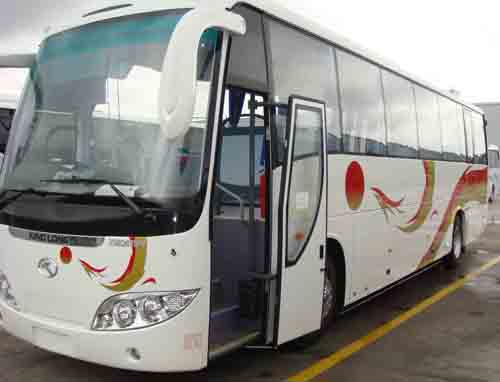
Flying Eagle offers seven-seaters, 16-seat minibuses and 45/49-seat cross-border coaches. Local 60-seat coaches are not part of the cross-border range, so use 45/49 seats as the largest planning unit.
| Total including teachers and leaders | Suggested cross-border vehicle | Suitable groups |
|---|---|---|
| 1–6 people | Seven-seater | Advance visits, executives and small business groups |
| Around 7–16 people | 16-seat minibus | Clubs, small exchanges and chamber delegations |
| Around 17–49 people | 45/49-seat coach | One class or a departmental study visit |
| 50–98 people | Two 45/49-seat coaches | Two classes or a business delegation |
| 99 people or more | Several 45/49-seat coaches, with a 16-seat vehicle for the remainder | Whole-year exchanges and large chamber groups |
- Passenger numbers must not exceed approved seating capacity.
- Multi-day exchanges carry more luggage; leave spare seats and baggage space per vehicle.
For local fleet combinations, see the large-group coach hire guide.
Ports
Choosing Shenzhen Bay, HZMB or Lok Ma Chau/Huanggang
Three land crossings are commonly used, with different operating hours and destination suitability. Drivers suggest a crossing based on the destination and conditions that day.
| Checkpoint | Clearance arrangement | Passenger opening hours | Suitable destinations |
|---|---|---|---|
| Shenzhen Bay Port | Co-location of both immigration checks | 06:30–24:00 | Nanshan, Qianhai and Bao'an in Shenzhen; onward to Guangzhou, Dongguan and Foshan |
| Hong Kong–Zhuhai–Macao Bridge checkpoint | Separate checks in each jurisdiction | 24 hours | Zhuhai, Zhongshan and Macao directions |
| Lok Ma Chau / Huanggang | Separate checks at two locations | 24 hours | Futian, Shenzhen; late-night or early-morning trips |
Shenzhen Bay Port
Both Hong Kong and mainland immigration procedures are completed in one passenger terminal, making this a common group crossing. Passenger clearance ends at midnight, 24:00; groups returning late should take note.
Hong Kong–Zhuhai–Macao Bridge checkpoint
Zhuhai and Zhongshan groups commonly use the bridge for shorter journeys. The checkpoint operates 24 hours and has spacious passenger halls.
Lok Ma Chau / Huanggang
Open 24 hours, with Hong Kong departure and mainland arrival processed separately. Walking distances on the mainland side are longer, so groups should allow more time. Suitable for late-night or early-morning trips.
Border crossing
Group border clearance, step by step
This is a general cross-border coach procedure; follow checkpoint instructions on the day:
- Before departure: The leader collects document numbers and checks everyone has valid documents in hand luggage, not the luggage compartment.
- Leaving Hong Kong: The vehicle reaches the inspection point; passengers generally remain aboard and present documents as directed.
- Entering mainland China: Passengers take documents and personal belongings off the coach for clearance in the passenger hall; large luggage can generally remain aboard.
- Reboarding: Return to the same coach at the designated point. The leader takes another roll call before departure.
- Return journey: Passengers also disembark for mainland departure and Hong Kong arrival procedures. The coach then continues to the school or agreed destination.
How long should clearance take?
Allow 30–45 minutes for the group, depending on checkpoint queues, and longer on Friday evenings, around long holidays and festivals. Each coach's passengers should follow their own leader rather than mingle with other groups in the terminal.
Valuables during clearance
Keep documents, wallet, phone and medication with you, not on seats. Label luggage stored below with names.
Documents
Greater Bay Area exchange document checklist
| Participant status | Documents generally required |
|---|---|
| Hong Kong residents who are Chinese nationals | Valid Mainland Travel Permit for Hong Kong and Macao Residents |
| Non-Chinese Hong Kong permanent residents | May apply for the Mainland Travel Permit for Hong Kong and Macao Residents (Non-Chinese Citizens), or use a passport and valid Chinese visa |
| Mainland residents | Exit-entry Permit for Travelling to and from Hong Kong and Macao with valid endorsement |
| Foreign nationals | Passport and valid Chinese visa, or applicable entry arrangements |
Three checks for group leaders
- Collect document details two to three weeks ahead and check expiry dates, allowing time for applications or renewals.
- Confirm entry arrangements early for non-Chinese pupils or staff.
- Check documents again before boarding on departure day.
The latest immigration authority requirements apply.
Price
Cross-border coach prices: six worked examples
| Cross-border one-way transfer | Seven-seater | 16 seats | 45/49 seats |
|---|---|---|---|
| Urban Kowloon / Hong Kong Island → Shenzhen AirportHoliday quotations may vary | From 1,100 | From 1,500 | From 2,000 |
| Shenzhen Airport → urban Hong KongHoliday quotations may vary | From 1,200 | From 1,800 | From 2,100 |
- Seven-seaters: +$200 per trip before 07:00 or after 22:00.
- 16-seat minibuses and 45/49-seat coaches: +$500 per trip before 07:00 or after 19:30.
- Waiting is limited to 15 minutes; exceeding this is charged as 1 hour at $350/hour.
- Supply addresses and itineraries for Shenzhen city, Guangzhou, Zhuhai, Dongguan, Foshan, Zhongshan or multi-day quotations.
Example 1: one class visiting the Shenzhen Airport area
40 pupils and 4 teachers total 44, using one 45/49-seat coach. Outward from $2,000 and return from $2,100; total from $4,100, around $93 per person or more.
Example 2: the same trip returning after 19:30
Add the $500 return surcharge: $4,100 + $500 = from $4,600. Departing on the return before 19:30 avoids this charge.
Example 3: departure at 06:45
Before 07:00, a 45/49-seat coach adds $500: $2,000 + $500 = from $2,500. Moving departure after 07:00 saves $500.
Example 4: a 12-person club exchange
One 16-seat minibus: outward from $1,500 and return from $1,800; total from $3,300, around $275 per person or more.
Example 5: two classes, 90 participants
Two 45/49-seat coaches: outward $2,000 × 2 = $4,000 or more; return $2,100 × 2 = $4,200 or more; total from $8,200.
Example 6: late return assembly
If the group remains incomplete 15 minutes after boarding time, waiting is charged as 1 hour at $350. Punctual assembly avoids this charge.
Schedule
Sample one-day Shenzhen study visit
| Time | Arrangement | Tip |
|---|---|---|
| 07:15 | School assembly, roll call and document check | Documents in hand luggage |
| 07:30 | Cross-border coach departs | After 07:00 to avoid the early surcharge |
| 08:30–09:15 | Clear Shenzhen Bay Port | Disembark for mainland entry |
| 10:00–12:00 | Visit a business or science museum | Coach transfers according to itinerary |
| 12:15–13:30 | Lunch | |
| 14:00–16:30 | Second visit | |
| 17:00–17:45 | Return border clearance | Allow queueing time |
| 18:45 | Return to school | Finish before 19:30 to avoid evening surcharge |
Include all mainland inter-venue transfers in the itinerary when requesting a quotation.
School tours
School mainland exchange considerations
Education Bureau guidance and leaders
Education Bureau guidance on overseas study activities reminds schools to safeguard participants. Leaders may include appointed adult parents or alumni as well as staff, provided they understand the activity and accept student care and management duties. Include all leaders and teachers in the seat count.
Transport for school-organised exchanges
Bureau-commissioned mainland exchange programmes generally have contractors arrange transport, accommodation, meals and activities. Schools may also apply for relevant funding to design their own exchanges, for which they arrange cross-border transport themselves.
Student management suggestions
- Assign one teacher per coach for roll calls and document checks.
- Students follow their teacher during clearance and stay together in the terminal.
- Explain procedures and meeting points before departure.
- Prepare emergency contacts and student health information.
For local school outings, see the school trip coach guide.
Corporate & associations
Business visits and hometown association trips
Business delegations
Factory, supplier, technology park or exhibition visits often involve several locations in a day. Executive advance visits can use seven-seaters; departments can use 16 or 45/49 seats. Corporate customers can apply for monthly billing. For other corporate arrangements, see the company outing coach guide.
Chambers and delegations
A 16-seat minibus suits smaller delegations with tight schedules. Ask ahead about a microphone for onboard briefings.
Hometown associations and community visits
Groups visiting their hometowns may include older adults; allow more boarding and border time. See the older-adult and community coach guide.
Booking
Booking lead times and quotation details
Cross-border vehicles and drivers require more complex arrangements than local services, while schools and organisations need internal approval. Enquire early; holiday quotes vary and long-holiday periods merit earlier confirmation.
When enquiring, provide
- Travel date, departure and return times.
- Total passengers including teachers, leaders and staff, plus luggage quantities.
- Hong Kong pickup and full addresses of all mainland destinations.
- Whether transfers between mainland venues are needed.
- Day return or multi-day itinerary.
- Document categories; mention any non-Chinese participants.
- Quotation and payment requirements.
Contact us by telephone, WhatsApp, WeChat (candypak0923, suitable for cross-border enquiries) or the Online enquiry form. For service details, see Hong Kong–mainland vehicle hire service.
Common mistakes
6 common Greater Bay Area coach booking mistakes
- Planning with local 60-seat coaches: Cross-border vehicles have at most 45/49 seats; calculate fleet size accordingly.
- Putting documents in the luggage compartment: They must be carried for inspection.
- Returning too late: Large vehicles add $500 per trip after 19:30; Shenzhen Bay passenger clearance ends at 24:00.
- Very early departure: Large vehicles add $500 per trip before 07:00.
- No clearance buffer: Allow 30–45 minutes for groups, and more around holidays.
- No roll call after clearance: Check everyone at every boarding.
FAQ
Greater Bay Area exchange coach FAQs
How much is a cross-border coach to Shenzhen?
Urban Kowloon/Hong Kong Island–Shenzhen Airport one-way fares start at $2,000 for 45/49 seats, $1,500 for 16 seats and $1,100 for seven-seaters. Supply addresses for Shenzhen city or other destinations. Holiday quotations may vary.
Must exchange groups leave the coach at the border?
Passengers generally remain aboard when leaving Hong Kong, but take documents and belongings through the passenger hall for mainland entry. Large luggage can generally remain aboard. Follow checkpoint instructions.
What is the largest cross-border coach?
Flying Eagle's largest cross-border vehicles have 45/49 seats. Larger groups use several coaches, with a 16-seat minibus for remaining passengers.
Which checkpoint should an exchange use?
Shenzhen Bay commonly serves Nanshan, Qianhai and Guangzhou-bound trips; the bridge serves Zhuhai and Zhongshan. Late or early trips can use 24-hour Lok Ma Chau/Huanggang. Drivers advise based on destination.
Is there an evening return surcharge?
Yes. 16/45/49-seat departures after 19:30 add $500 per trip; seven-seaters after 22:00 add $200.
Can we visit Guangzhou, Zhuhai or Dongguan?
Yes. Flying Eagle serves Shenzhen, Guangzhou, Zhuhai, Dongguan, Foshan and Zhongshan. Supply full addresses and itinerary for a quotation.
Can non-Chinese students join?
Non-Chinese Hong Kong permanent residents may apply for the relevant Mainland Travel Permit or use a passport and valid Chinese visa. Confirm documents early; current official immigration rules apply.
How long should groups allow at the border?
Allow 30–45 minutes, with more time on Friday evenings, around long holidays and festivals.
Request a Greater Bay Area cross-border coach quotation
Send the date, numbers, Hong Kong pickup and mainland itinerary. We will suggest vehicles and checkpoints and provide a quotation.